By Israel's own numbers, half of Gaza's ruins had no target and two in three of its dead were not fighters
The army counts 65,000 targets struck and 24,000 combatants killed. Satellites count 134,000 buildings destroyed, and the health ministry 74,000 dead. The difference is a war Israel has never explained
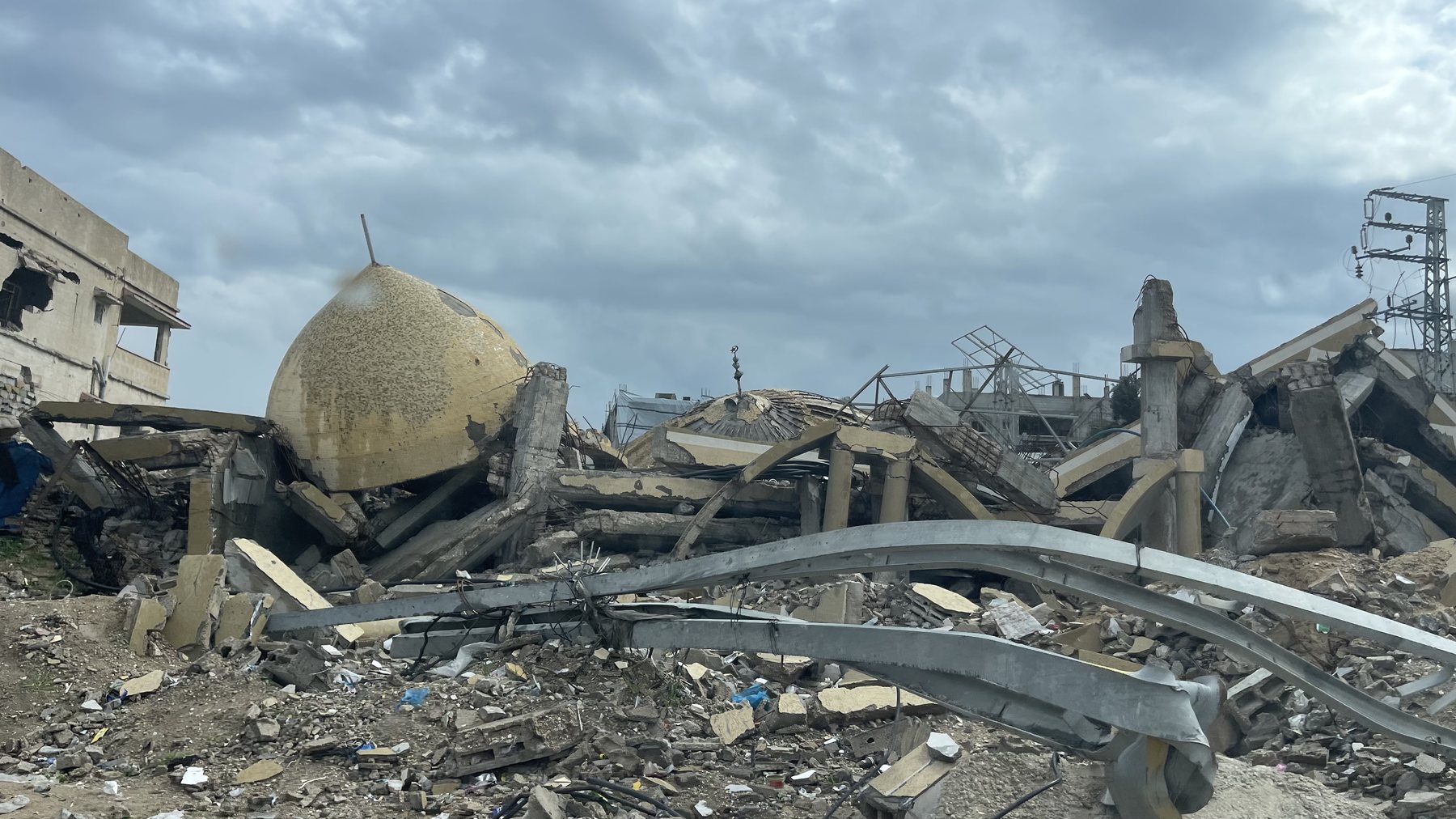
Israel keeps two counts of its war in Gaza. The army says how many "targets" it has struck: 29,000 by February 2024, 40,300 a year into the war, 19,500 more in 2025, 65,000 in all by this month. And it says how many of the dead were combatants: 17,000 by October 2024, 22,000 by the ceasefire of October 2025, more than 24,000 now. Two other counts exist. The United Nations counts Gaza's buildings from satellites: by October 2025, 123,464 had been destroyed and 198,273 destroyed or damaged to some degree, four in five. Gaza's health ministry lists the dead by name, age and sex: 74,250 by this month. In January a senior Israeli officer told reporters that the army believes the ministry's toll is about right; the army's spokesman said this was not official data, and the army has published none of its own. Set Israel's counts against the other two and the war divides in half. One half is the war Israel describes: targets struck, fighters killed. The other half is destruction and death for which Israel has given no military reason at all.
Arguments about Gaza run on anecdote: a video, a general's quote, a tunnel under a hospital, a number repeated until it sounds counted. We did the dull thing. We took Israel's own figures for what it struck and whom it killed, gave Israel the benefit of every doubt, and set them against the satellite count of destroyed buildings and the ministry's count of the dead, which a senior Israeli officer has called largely accurate. Then we built Israel's own explanation for the rest, that Hamas was in the buildings, as a simulation, and let it run with every lever on Israel's side. Even so, half of the buildings and two in three of the dead are left without a reason.
The buildings
Take the army's count at its word, and take every target to be a different building, which flatters it: a target can be a person, a vehicle or a rocket launcher in a field, none of which is a building. By October 2025 the army had reported 55,000 to 61,000 targets in Gaza (its figure for the last quarter of 2024 is unreported; its total of 65,000 by this month sets the most it can be). That covers 45% to 49% of the 123,464 destroyed buildings. The other half, 63,000 to 68,000 buildings, were destroyed without being counted as a target by the army that destroyed them. The latest figures say the same: 65,000 targets against the 134,422 buildings destroyed by June 2026, or 48%.
Could they have had a military reason the army did not count? The usual claim is that Hamas was in the buildings. Grant it in full: every Hamas fighter in a different building, each one a legitimate target, each destroyed for that reason. Nobody knows how many fighters Hamas had. Published estimates of its strength before the war run from 20,000 (American intelligence) to 30,000, and some Israeli reports say 40,000; none can be checked. We take 15,000 to 40,000, to cover them all. At 40,000, a fighter in every building explains at most 32% of the destroyed buildings; at 15,000, 12%. The army's claims about infrastructure are smaller still: 4,700 tunnel shafts located by October 2024, which is 3.8% of the destroyed buildings; 270 weapons depots and 14,000 undefined "terrorist infrastructures" in 2025, 11%. Count every one of them as a separate building that no strike had already covered, which is more than generous, and the army's account reaches 60% to 64% of the destroyed buildings. Half of what Israel destroyed has no target in its own count. At least a third has no reason of any kind on record.
When the other half fell
The satellites say when. In the war's first four months the army reported more targets than the satellites found destroyed buildings: 29,000 against 26,000, or 1.12 targets for every building. Whatever one thinks of those strikes, the army's count can cover them. Then the counts part. From February to October 2024 the army added 11,300 targets while 29,000 buildings were destroyed. From October 2024 to the end of 2025 it added at most 25,000 targets while 73,000 buildings fell: 0.34 targets for every newly destroyed building. And the war was getting quieter by every other measure. ACLED, which logs violent events from press reports, counts 3,800 deaths a month in Gaza in the war's first year and 1,500 a month in the fifteen months after it. The destruction did not slow: 4,600 buildings a month in the first year, 4,900 a month after it.
What levels buildings at that rate with so few strikes is demolition, and the evidence for it comes from Israel as much as from Gaza. The army has said since the war's first winter that it demolishes buildings that sit over tunnel shafts or are rigged with explosives; its own summary of 2025 lists 19,500 targets struck and, separately, 14,000 "terrorist infrastructures" destroyed. The Centre for Information Resilience counted 17,916 buildings in eastern Rafah: 22% were destroyed by 1 February 2025, during a ceasefire, and 68% by 11 May, after the army cut its Morag corridor across the city, with excavators and timed detonations on film. The kilometre-wide belt along the border held some 2,850 buildings, by an Israeli geographer's count for the Associated Press, and was being cleared from the war's first months. Israeli soldiers have described the routine. One guarded four or five bulldozers that flattened 60 homes a day. A bulldozer operator boasted of 50 buildings a week: "Instead of sending soldiers to clear houses and risk their lives, we destroy the houses from outside."
A demolition can be lawful. A house rigged with explosives, or one that sits on a tunnel shaft, may be destroyed. But the army has never said which of the buildings it levelled were those, has published no count of them, and does not count them as targets. The half of Gaza's destruction that Israel cannot account for is, by the timing, the half that came by bulldozer.
The people
The same arithmetic applies to the dead, and again Israel's own figure does the work. The army says it had killed 22,000 combatants by the October 2025 ceasefire, when the ministry's toll stood at 67,000. It now says more than 24,000, against a toll of 74,250. By its own count, then, 50,000 of the dead, two in three, were not fighters. The health ministry's lists give an age and a sex: among 74,250 dead there are 20,179 children and 12,500 women, 44% of the total, who were not fighters on any definition. Of the 41,571 men, if every one of the army's 24,000 combatants was among them, more than four in ten were not fighters either.
"Human shields" does a great deal of work in opinion pages and none at all in the arithmetic: the army's own count of combatants is the same number whoever was standing in front of them.
Even the 24,000 is generous. The army counts "operatives", a word it does not define. Under the laws of war, belonging to Hamas's civil administration does not make a person a target; fighting does. If the count includes police, clerks or officials of the Hamas-run administration, as the word allows, the share of the dead who were fighters is lower still, and the share who were not is higher than two in three.
The chase that does not add up
"Hamas was everywhere" is usually offered as a sentence. We offered it a grid.
Could the half without a target be the price of chasing fighters who move? A fighter who uses five buildings over the war might seem to justify five. We tested the claim with a simulation: Gaza as a grid of 245,000 buildings; fighters placed in part of it; each month the real number of buildings destroyed that month, from the satellite count, handed out first to any fighter the army has found; a found fighter's building destroyed, the fighter dead with some probability; survivors moving, recruits arriving. The unknowns, how many fighters, how much of Gaza they held, how often the army found one and how often a strike killed him, were not chosen. We drew 3,000 combinations at random and kept the 150 that best match three things reported about the war: how many fighters Hamas still had, an American intelligence assessment, reported by Reuters, that recruitment had roughly replaced losses by early 2025, and a toll of dead fighters that fits the age and sex of the dead. On the first the reports disagree, so we ran it twice: once with the 20,000 to 23,000 fighters that Israeli television reported at the start of 2025, and once with ACLED's judgment that a year into the war Hamas kept at most half its men.
The chase explains 4% to 53% of the destroyed buildings, most likely 14% to 17%. The floor is firm; the figure in the middle leans on an assumption, and the floor does not. The top depends on one thing no data settles: how much of Gaza Hamas held. And the model carries a lesson for the army's defenders. Make the army good at its job, finding most fighters quickly and killing them, and it explains less, not more: 63% of the first month's destruction, then less and less, because by the ninth month four-fifths of the fighters are dead and the 88,000 buildings destroyed after that have almost nobody left to chase. By mid-2026 the share is 9%. An army that was precise and a war that had to go on for three years cannot both be true of the same rubble.
Is it genocide?
That is not a question this publication can answer, or tries to. Genocide is a crime of intent, and intent is for courts and for the international bodies that gather evidence of it. An independent commission of inquiry set up by the UN's Human Rights Council concluded in September 2025 that Israel has committed genocide in Gaza, a finding Israel rejects; the International Court of Justice has South Africa's case before it and has not ruled. Anyone else who tells you the numbers settle it, either way, is selling something. What the numbers here can say is narrower. With every lever set Israel's way, every target a different building and every one of the army's 24,000 combatants a fighter, half of Gaza's destroyed buildings have no target in the army's count, at least a third have no reason of any kind on record, and two in three of the dead are not fighters by the army's own count. The explanations Israel has offered are tested against Israel's own figures, and they fail by half. What the remainder was, and why, is for others to judge.
Israel's own numbers draw the line. On one side are 65,000 targets and 24,000 fighters: the war the army describes. On the other are almost 70,000 buildings for which it has named no target, at least 40,000 for which it has given no reason of any kind, and 50,000 people it does not call fighters. The second war is the larger one. It is the one Israel has never explained.
Every number in this article, every assumption behind the simulation and every version of its specification is set out in the full report, with the methods as an appendix: download the report (PDF). The data behind every chart is free to reuse with credit.
This article was corrected on October 11th 2026 after a check of its sources. An earlier version said seven in ten of the dead were not fighters by the army's own count; with the army's latest count of combatants the share is two in three, as it was at the ceasefire. It said the army accepts a toll of about 70,000; that figure came from an anonymous briefing which the army's spokesman said was not official data. It credited an estimate of 20,000 to 23,000 remaining fighters to ACLED; the figure is Israeli television's, and the simulation has been run again on both that reading and ACLED's own (4% to 53%, most likely 14% to 17%; it was 5% to 54%, most likely 14%). The army's newer total of 65,000 targets moves one ratio from 0.36 to 0.34. The finding that half of the destroyed buildings have no target in the army's count did not change. Details are on our corrections page.
Data and methods
Data
Structural damage: the UN Satellite Centre's (UNOSAT) comprehensive damage assessments of the Gaza Strip, six dates from 7 November 2023 to 16 June 2026, each giving structures destroyed, severely, moderately and possibly damaged. The 11 October 2025 assessment (123,464 destroyed, 198,273 affected, 81% of structures) is the primary snapshot, the latest for which we hold UNOSAT's own document; the June 2026 figures (134,422 destroyed, 201,290 affected, 82%) are as relayed by the UN and the Palestinian statistics bureau, the UNOSAT document not being online, and are reported alongside. The implied pre-war total drifts across reports (about 207,000 in the first, 245,000 to 248,000 later), so UNOSAT's own percentages are used rather than a single denominator. The army's figures: cumulative "targets struck" in Gaza, 29,000 on 20 February 2024 (Breaking Defense, from IDF data), 40,300 on 7 October 2024, 19,500 in calendar 2025, with 270 weapons depots and 14,000 "terrorist infrastructures" (Ynet, from the IDF's summary published on 31 December 2025), and 65,000 in all by 7 October 2026 (Times of Israel, from IDF data); 4,700 tunnel shafts located by October 2024; 17,000 operatives killed by October 2024, at least 22,000 combatants by the October 2025 ceasefire and more than 24,000 by October 2026 (Times of Israel). The army has published no death toll: a senior officer told reporters on 29 January 2026 that it believes the toll is about 70,000, and the IDF Spokesperson said this did not reflect official data. Hamas's strength: 25,000 before the war (IDF, October 2023, as reported), 20,000 to 25,000 (US estimates, via Reuters) and 30,000, "even up to 40,000" (Jerusalem Post); 20,000 to 23,000 remaining for Hamas and Islamic Jihad together (Israel's Channel 12, as reported by the Jerusalem Post on 1 January 2025, whose own sources said about 12,000); "up to nearly half" of a pre-war 25,000 to 30,000 remaining (ACLED, 6 October 2024); 10,000 to 15,000 recruited since the war began against a similar number killed (two congressional sources' account of US intelligence, Reuters, 24 January 2025). Tempo: ACLED's political-violence events and fatalities in the Gaza Strip by month, January 2016 to September 2026, from the HDX extract, used under ACLED's terms (our monthly sums are not redistributed). The dead: the Gaza Ministry of Health lists as compiled by Tech for Palestine, 74,250 to 7 October 2026 with totals by children, women and others; the named list was not downloaded. The toll at the ceasefire, 67,075 on 3 October 2025, from the ministry via the Costs of War project. Population structure: CIA World Factbook, 2017 estimate (archived copy; the Factbook was discontinued in 2026). Demolition: Centre for Information Resilience, "The destruction of Rafah" (13 October 2025, 17,916 buildings in eastern Rafah from 0.5m satellite imagery); Associated Press on the border belt (1 February 2024, citing a count by Adi Ben-Nun of the Hebrew University); +972 Magazine and Local Call on soldiers' accounts (15 May 2025, a reservist on 60 houses a day in Rafah; 30 July 2025, the bulldozer operator Avraham Zarviv); IDF statements on tunnel and booby-trap demolitions as reported by the Jerusalem Post and the Times of Israel.
The two counts
UNOSAT's destroyed count is interpolated linearly to the date of each army statement, and the two series are compared by period. One assumption: a target is one distinct destroyed building. The army does not define the term; a person, a vehicle or a launcher in open ground is no building, and a tunnel route may run under several, so the assumption can err either way. The last quarter of 2024 is missing from the army's count: it is bracketed between zero and 5,200, the most that the army's total of 65,000 by October 2026 allows once 40,300 and 2025's 19,500 are taken out (an earlier version filled it from ACLED's event count, about 6,400, which that total rules out). At October 2025 the army's count covers 55,412 to 60,612 of 123,464 destroyed buildings; at the latest figures, 65,000 of 134,422 (48%). By period, new targets per newly destroyed building are 1.12 (to 20 February 2024), 0.39 (to 7 October 2024) and 0.34 (to 31 December 2025; 0.27 with the floor). "No military reason on record" means exactly this: no claimed target, and no published count of demolitions or their grounds. It is not a finding that a building was unlawfully destroyed.
The ceiling
Bound 1: F fighters occupy at most F buildings at once, so fighter presence explains at most F divided by the destroyed count: 12% at 15,000 and 32% at 40,000. Bound 2 allows k buildings per fighter over the war, at most the smaller of the destroyed count and F × k; it stops constraining anything at k of 4 to 9 depending on F and is not used for a headline number. A spatial check on a 495 × 495 grid (245,025 cells) placed fighters at random in a share of the grid, moved half of them up to ten cells each month and struck every occupied cell at once: spread over all Gaza, the footprint overtakes the real destruction; confined to a quarter, 44% to 49% by October 2025; to a twentieth, 10% whatever the fighter count. Static targets are added from the army's own counts rather than by more modelling: 4,700 shafts (3.8% of destroyed), 270 depots (0.2%), 14,000 undefined "infrastructures" in 2025 (11%). Whether these overlap with the targets count is unknown (the 2025 summary lists "infrastructures" separately from targets struck); counted as separate buildings with no overlap, they raise the army's account from 45% to 49% to 60% to 64% of the destroyed buildings, which is the figure behind "at least a third has no reason of any kind on record".
The people
The army's count of combatants, more than 24,000 by October 2026, is set against the ministry's 74,250 to 7 October 2026: 50,250, or 68%, not counted as fighters by the army itself. At the ceasefire the same sum was 22,000 against 67,075, or 67%. The ministry's totals by children (under 18) and women are taken as not fighters; the remainder, 41,571, as adult men, of whom at most 24,000 can be the army's combatants. The population comparison (children under 15 were 44.8% of Gaza's people, and men and women of 15 and over about 27.5% each) is descriptive only: a higher share of men among the dead is consistent with combatant deaths and with men's greater exposure, and it is not used to count fighters.
The simulation
A search-and-removal process on a lattice with an exogenous hazard (not predator-prey: the army's budget does not respond to what it finds). Each month's budget is the real number of buildings destroyed that month, UNOSAT's count interpolated piecewise-linearly between its six dates. Each living fighter is found with probability p; the found fighters' buildings are struck first, up to the budget, and any budget left over is destruction this channel cannot explain. A struck fighter dies with probability q and leaves the pool. Survivors move as above; r recruits arrive at random in the occupied share of the grid. Cells already destroyed do not consume budget. The output is the count of distinct buildings ever struck for a fighter, set against the real count at each UNOSAT date. Five unknowns: the initial force, r, the share of Gaza, p and q. Fixed by choice, not data: the step size, a move chance of one half, the fighters-first rule and uniform placement. The grid is square, there are no evacuation orders and no deaths in ground combat.
Calibration
Three named combinations were run first and kept as bounds: an army that finds 60% of fighters a month and kills 90% of those it strikes, with 15,000 fighters in 5% of Gaza and no recruits; a middle case (25,000 fighters, a quarter of Gaza, found 7% a month, killed 60%, 520 recruits a month); and a slow army (40,000 fighters over all Gaza, found 5% a month, killed 30%, 1,000 recruits). The middle case's first version (found 20% a month) implied 37,011 dead fighters, 53% of all the dead, and a force far below any published count for late 2024; it was recalibrated and both versions are logged. Then, instead of hand-tuning, rejection ABC: 3,000 draws from wide independent priors (force uniform 15,000 to 40,000; recruits uniform 0 to 1,200 a month; share of Gaza log-uniform 0.02 to 1; p log-uniform 0.01 to 0.6; q uniform 0.1 to 0.95), one run each, keeping the 150 closest to three bands. Two bands are fixed: a force at month 15 within 0.7 to 1.3 of its starting size; and 6,000 to 25,000 fighter deaths by month 32, that is 15% to 60% of the 41,571 dead who are neither children nor women (the 15% to 60% is a judgment call). The third, the force remaining, has two published readings that disagree, so the calibration is run on each: (A) 20,000 to 23,000 alive at month 15, Channel 12's figure; (B) 12,500 to 15,000 alive at month 12, half of ACLED's pre-war 25,000 to 30,000. The kept draws explain 5% to 53% of the buildings destroyed by October 2025 (90% range), median 14%, under A, and 4% to 49%, median 17%, under B. The bands narrow the force (18,000 to 30,000 under A, 15,000 to 24,000 under B) and leave the share of Gaza where the prior put it; since that share drives the result (correlation 0.38), the top of the range is set by the prior: flat instead of log-uniform gives 5% to 59% and a median of 20% under either; a quarter of Gaza or less gives 4% to 30% and medians of 12% and 15%. B and the month-15 band pull against each other, as their sources do: 109 of B's 150 kept draws miss at least one band slightly. The floor survives every prior. No data found carries geographic content that could narrow it.
What was fixed in advance, and what changed
Every version of the specification is in the study's MODEL_SPEC.md with its date and reason: the bounds and the demographics (v1), the spatial simulation and its concentration parameter (v2, v2.1), attrition with the real monthly budget and the middle scenario's recalibration (v3, v3.1), the move of the scenarios onto the shared simulation core (v3.2), rejection ABC (v4), the army's own counts for static targets (v5) and the corrections of 11 October 2026 (v6). One bug was found and fixed on the way: strikes on buildings already destroyed had consumed the month's budget.
Corrected on 11 October 2026
A check of this study's sources found that the 20,000 to 23,000 fighters we had credited to ACLED was Channel 12's figure, for a different month; that the army's 2025 summary was published on 31 December, not 18 December; that the soldiers' accounts are from +972 Magazine and Local Call, not Haaretz; and that the army's "about 70,000" was an anonymous briefing its spokesman disowned. The army had also published newer totals (65,000 targets, more than 24,000 combatants). All are corrected above. The calibration was run again on both readings of Hamas's strength; the share of the dead who were not fighters, by the army's count, is two in three, not seven in ten; the late-period ratio is 0.34, not 0.36.
Not done
Which unclaimed buildings were lawful demolitions: no public record says. A geography of Hamas's presence, which alone would narrow the simulation's ceiling. Ground combat as a cause of fighter deaths. Several stochastic runs per draw. The army's own definition of "combatant" and "operative".
The data behind every chart can be downloaded from the data on GitHub, free to reuse with credit.
Cite this work
Our articles and data visualisations rely on work from many sources. When citing this article, please also cite the underlying data sources, listed in Data and methods.
Signum Average (2026) - "By Israel's own numbers, half of Gaza's ruins had no target and two in three of its dead were not fighters" Published online at signumaverage.com. Retrieved from: https://signumaverage.com/articles/gaza-building-damage/ [Online resource]
@article{signumaverage-2026-10-08-gaza-building-damage,
    author = {{Signum Average}},
    title = {By Israel's own numbers, half of Gaza's ruins had no target and two in three of its dead were not fighters},
    journal = {Signum Average},
    year = {2026},
    month = {oct},
    url = {https://signumaverage.com/articles/gaza-building-damage/},
    note = {Online resource}
}
Reuse this work freely
Text, charts and data on this page are published under the CC BY 4.0 licence: you may copy, adapt and republish them for any purpose, as long as you credit Signum Average. Third-party data keeps its original licence.